Started thinking about browser wallets late last night, and it stuck with me into the morning. Whoa! There are a ton of options out there, and most of them promise ease and security in the same breath. Here’s what bugs me about that marketing—it’s often two different problems mashed together: usability and true threat modeling, and companies rarely fix both at once. So I dug in, somethin’ of a hobby-hunt, to see how a purpose-built extension could actually make my everyday DeFi safer.
My instinct said a clean UI equals safety, but that was just a first impression. Initially I thought simpler meant safer, though actually that isn’t always true. I used a handful of wallets for different chains, and each one leaked tiny friction points that made me less likely to check transactions carefully. Really? Turns out, the small annoyances—confusing approval flows, unclear gas warnings, stray token approvals—invite mistakes.
Okay, so check this out—there’s an extension that tackles many of those pain points head-on. I’m biased, but I’ve been using it as my main wallet in Chrome and Brave for months. It’s called rabby and it focuses on explicit approvals, clearer UX for approvals, and per-site wallet isolation. Hmm… That naming is odd maybe, but the feature set is smart and practical.
What I liked first was the permission model. Here’s the thing. Rabby separates contract approvals from simple transfers which means you can approve limited allowances rather than granting unlimited access, and that reduces blast radius if a dApp or token turns out to be malicious. On the surface it’s just an option toggle, but under the hood it nudges people toward safer defaults. This is a small shift in UX that matters a lot when you habitually use dozens of dApps monthly.
Initially I thought feature parity with other wallets would be the deciding factor, but then I realized risk surfaces are mostly in the tiny, overlooked interactions. So actually, wait—let me rephrase that: parity matters, but defaults and clear dialogs are what stop mistakes. On one hand, heavy-handed confirmations can annoy power users, though actually gentle nudges and sensible presets reduce long-term user error without killing productivity. Seriously? Yes—UX and security are not opposites if the product is designed with threat models in mind.
Bridges and multi-chain apps mean your extension needs to handle many chains securely. Rabby supports EVM chains and gives you network isolation so you don’t accidentally sign on the wrong chain or for a wrong contract address. My gut feeling used to be ‘one wallet to rule them all’ but real life taught me that’s dangerous. Whoa! Segregation of accounts, per-site sessions, and clear nonce/gas visuals make mistakes less likely.
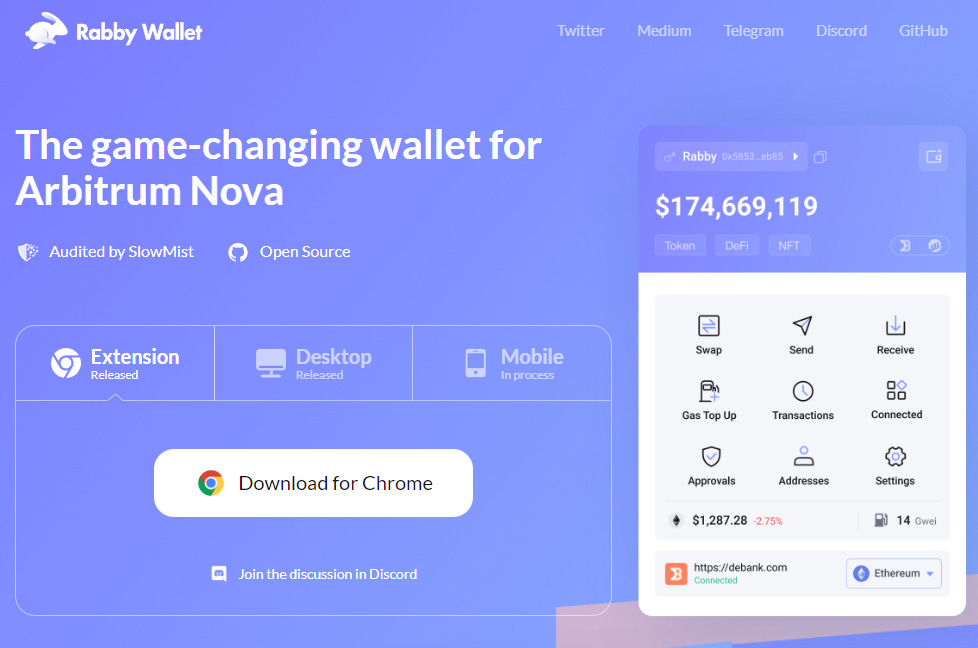
Open source matters when you’re trusting an extension with funds. I skimmed the repo and the update cadence, and that gave me more confidence than a flashy marketing page ever could. I will be honest—I’m not a full-time auditor—so I rely on community scrutiny, reproducible builds, and reputable maintainers. This part bugs me about many wallets: missing changelogs and silent updates. Wow.
Where to get it and how I use it
Here’s the thing. If you want to try it yourself, grab the extension from the official page. I installed from the store, set up a new wallet, and moved a small test amount before trusting it with larger positions. You can find the download here: rabby. Also, enable optional settings like limited approvals and per-site isolation, and consider a hardware wallet for large stashes.
Advanced users will appreciate transaction simulation and built-in dApp safety checks. The wallet shows contract calls and token approvals before you sign, which is a little extra friction but prevents dumb mistakes. My instinct said that extra screens slow me down, but they saved my neck once when a token approval tried to set an enormous allowance. I’m not 100% sure every simulation catches every edge-case, but it’s a meaningful layer. In short, it nudges behavior in the right direction.
No tool is perfect. Rabby has tradeoffs: it’s focused on EVM ecosystems and some niche chains or ledger integrations require manual workarounds. On one hand it’s lightweight and practical, though on the other hand you’ll find gaps if you’re deep into exotic L2s or experimental chains. I’m biased toward safety over bells-and-whistles. If your workflow is very very unique you might prefer a custom solution, or run multiple wallets—it’s not a one-size-fits-all world.
Okay, so here’s my bottom line. I’m calmer now than when I started this post; testing the extension and running simulations changed my initial skepticism into cautious approval. I’m still a bit twitchy about silent updates and ecosystem centralization, and you should be too—don’t trust blindly. But honestly, for day-to-day DeFi interactions this extension has become part of my toolkit. Feels good to have fewer surprises.
FAQ
Is Rabby a hardware wallet?
No, it’s a browser extension wallet that can integrate with hardware wallets for signing; treat it as a manager and UX layer rather than a cold storage device by itself.
Can I use it with multiple chains?
Yes, it supports many EVM-compatible chains and helps prevent cross-chain signing mistakes with clear network indicators and isolation features.
What should I do before trusting any new extension?
Test with a small amount, read release notes, check the repository and community feedback, and keep large balances in hardware wallets or multisig arrangements where possible.